
Understanding the handling of JCT (such as payment of import JCT, collection of sales JCT from customers, and JCT returns) is crucial to avoid significant cost burdens. This is a vital aspect, so please ensure a thorough understanding to determine the optimal business model.
Basic procedure
When a foreign entity without a physical presence in Japan (a non-resident company) imports goods into Japan and subsequently sells them within Japan, the handling of Japan Consumption Tax (JCT) can be broadly divided into the following three steps:
Step 1: At the Time of Import
- You are required to pay import consumption tax equivalent to 10% of the customs-declared value plus customs duties to Japan Customs.
- Foreign entities without a base in Japan must appoint an Attorney for Customs Procedures (ACP) so that the foreign entities can act as the IOR (Importer of Record) themselves.
Step 2: At the Time of Sale
- When selling goods domestically, you must collect 10% consumption tax from the customer on the sales price.
Step 3: Tax Return Filing (Typically Annually)
You file an annual consumption tax return, paying the difference between:
- the JCT collected from customers (output tax), and
- the JCT paid at the time of import and other business purchases (input tax).
If input tax exceeds output tax, the excess amount may be refunded.
A Tax Representative (licensed Japanese tax accountant) must be appointed to support this process.
Please note:
Only entities listed as the Importer of Record (IOR) are eligible to claim input tax credits or obtain a refund for Japan’s import consumption tax (JCT). Therefore, foreign entities must appoint an Attorney for Customs Procedures (ACP) in order to act as the IOR themselves.
If another company is listed as the IOR, you will not be able to deduct the import JCT on your own tax return. In that case, you would be required to remit the full amount of collected JCT to the tax office—resulting in significant additional costs.


If You Qualify as a JCT-Exempt Business
If you meet the requirements to be treated as a JCT-exempt business, you may choose either of the following:
- Operate as a JCT-exempt business; or
- Register as a JCT-taxable business and Qualified Invoice Issuer under the JCT Invoice System.
For details on whether you qualify as a JCT-exempt business, please refer to our guide on “Are we a Tax-Exempt Business?” further down on this page.
[1] Operating as a JCT-Exempt Business
- You pay 10% import JCT to Japan Customs at importation (Step 1)
- You collect 10% sales JCT from customers in Japan (Step 2) → You are not required to file a JCT tax return (Step 3 is not applicable)
However, as you are not filing a JCT return, you cannot claim input tax credits or obtain a refund for the JCT paid at the time of import.
Also, since you are not a Qualified Invoice Issuer, your customers—if they are JCT-registered businesses—cannot deduct 100% of the JCT they pay to you. This may negatively impact your business, as customers may prefer to deal with suppliers who are registered invoice issuers.
However, if your customers are individual consumers, who typically do not file JCT returns, not being a Qualified Invoice Issuer is unlikely to have a negative effect.
In the end, whether to remain JCT-exempt or register as a taxable business/invoice issuer should be determined based on your business strategy and the nature of your customers.
[2] Operating as a JCT-Taxable Business / Qualified Invoice Issuer
- You pay 10% import JCT to Japan Customs (Step 1)
- You collect 10% sales JCT from customers in Japan (Step 2)
- You file an annual JCT tax return, deducting the input JCT (including import JCT) from the output JCT and paying the net amount to the tax office or claiming a refund if applicable (Step 3)
Issuing qualified invoices enables your customers to fully deduct the JCT they pay to you, enhancing your credibility and facilitating smoother business relationships.
Please remember:
You must act as the Importer of Record by appointing an ACP to be eligible to claim the import JCT as input tax. If another company is listed as the importer, no JCT credit or refund can be claimed for the import consumption tax.
Are we a Tax-Exempt Business?
Tax Filing Obligations of Nonresidents and Foreign Corporations
First, the consumption tax received from customers in Step 2 above should generally be paid to the national tax office. Consumption tax is imposed on transfers, etc. of assets made in Japan. Therefore, even if a nonresident or foreign corporation transfers assets in Japan, it is subject to consumption tax and is obligated to pay the tax.
In some cases, such as exempt businesses, it may not be necessary to pay the tax to the national tax office.
However, the following are examples where one cannot qualify as an exempt business and must file for consumption tax:
Examples of Entities Required to File JCT Tax Returns (Non-Exempt Businesses)
- Qualified Invoice Issuers:
Businesses registered as qualified invoice issuers under Japan’s invoice system. - Businesses with Taxable Sales Exceeding JPY 10 Million During the Base Period:
Entities whose taxable sales in Japan during the base period (generally the fiscal year two years prior) exceed JPY 10 million. - Businesses with Taxable Sales Exceeding JPY 10 Million During the Specific Period:
Entities whose taxable sales in Japan during the specific period (generally the first six months of the previous fiscal year) exceed JPY 10 million. - Newly Established Corporations with Capital of JPY 10 Million or More:
Newly established corporations (including certain newly established corporations) with capital or investment of JPY 10 million or more during a taxable period without a base period. - Foreign Corporations with Capital of JPY 10 Million or More Deemed to Have No Base Period: (Applicable to taxable periods starting on or after October 1, 2024) *
Foreign corporations without a base period and with capital or investment of JPY 10 million or more at the start of the fiscal year are not exempt from consumption tax obligations. - Businesses Opting for Taxable Enterprise Status:
Entities that voluntarily select to be treated as taxable enterprises.
*Important Notes on the 2024 JCT Tax Law Amendment
Under the 2024 amendment of Japan’s Consumption Tax Law, the exemption for foreign corporations initiating business in Japan has been significantly tightened.
Foreign corporations with no base period and capital of JPY 10 million or more at the beginning of the fiscal year are no longer exempt from consumption tax obligations during that fiscal year.
Starting from taxable periods beginning on or after October 1, 2024, a foreign corporation that has an existing base period but was primarily conducting business outside Japan and subsequently starts taxable business activities in Japan after the day following the end of its base period will be deemed to have no base period.
Being “deemed to have no base period” means that if the corporation’s capital or investment is JPY 10 million or more, it will incur consumption tax obligations from the deemed base period fiscal year onward.
As a result of this amendment, many foreign corporations will be required to file consumption tax in Japan from their first year of business operations in the country.
Our Japan Consumption Tax (JCT) Representative Services
At ACP Japan, we provide a comprehensive one-stop service that covers both customs procedures through the Attorney for Customs Procedures (ACP) and Japan Consumption Tax (JCT) procedures with the National Tax Agency through a designated JCT Tax Representative.
By working closely with our trusted partner tax accountants, we act as your ACP while maintaining close coordination and information sharing with the tax representative. This collaboration ensures the proper deduction and refund of Japan Consumption Tax paid at the time of importation.
Why choose us?
We specialize in navigating complex issues at the intersection of customs procedures and taxation—an area where our ability to offer practical, comprehensive support from both perspectives sets us apart. Understanding the close relationship between customs duties and national taxes (especially, Japan Consumption Tax – JCT), and addressing both in an integrated manner, is crucial in the context of international trade.
- Customs and International Trade Professionals – Led by our CEO, Mr. Sawada—Certified Customs Specialist and former KPMG professional—ACP Japan provides expert-level support in Customs and international trade. Mr. Sawada also serves as an external expert for the World Bank’s B-READY project in the field of customs and international trade.
- Full Compliance with Japanese Customs Law – We ensure full adherence to Japanese Customs Law, including Importer of Record (IOR) structure, HS code classification, and customs valuation. We assist in preparing all essential shipping documents for non-resident entities.
- One-Stop ACP and JCT Tax Representative Service – We offer a fully integrated service for both ACP and JCT Tax Representative needs. Our expertise enables efficient deduction or refund of import JCT through accurate JCT tax filings.
- Multilingual Communication – Our team communicates fluently in English, Japanese, and Chinese, offering smooth coordination with global clients and authorities in Japan.
- Support for Regulated Products – Our ACP/IOR partnership system can manage regulated items, including cosmetics, PSE-products, foodstuffs, and tableware.
- Trusted by Global Clients – Serving around 100 ACP clients annually, including many Amazon sellers, we’re a certified provider on Amazon SPN (Service Provider Network) under Trade Compliance.

Track Record – Attorney for Customs Procedures (ACP) Services
We have supported import and export operations in Japan for over 200 clients across more than 40 countries.
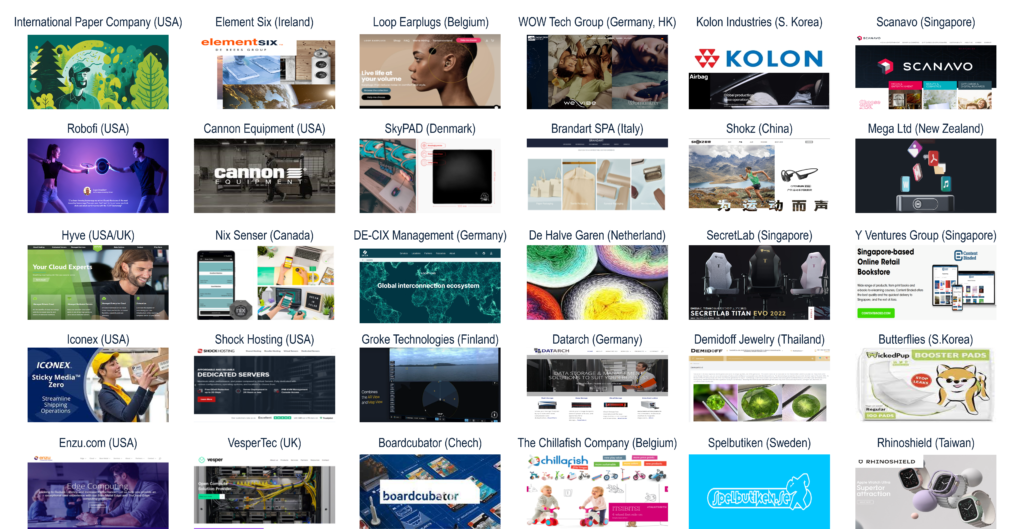
Examples of International Logistics Partners We Have Worked With
We have a proven track record of working with a wide range of logistics providers. As the Attorney for Customs Procedures (ACP), we handle customs-related responsibilities while logistics companies manage transportation and warehousing operations.
- American Overseas Transport (AOT)
- Apex International
- Brink’s
- CEVA Logistics
- Coshipper
- Crane Worldwide Logistics
- DB Schenker
- DGX (Dependable Global Express)
- DHL Express
- DHL Global Forwarding
- Dimerco
- DSV Air & Sea
- Expeditors
- FedEx Express
- FERCAM
- GOTO KAISOTEN Ltd.
- Harumigumi
- Herport
- ICL Logistics
- JAS Forwarding
- Kintetsu Express
- Kokusai Express
- Kuehne + Nagel
- Mitsubishi Logistics
- MOL Logistics
- Nankai Express
- Nippon Express
- OIA Global
- PGS
- Rhenus Group
- Röhlig
- Sankyu
- Sanyo Logistics
- Scan Global Logistics
- Seino Schenker
- SEKO Logistics
- Shibusawa Logistics Corporation
- Shin-Ei gumi
- Shiproad
- Sumitomo Warehouse
- UPS
- UPS Supply Chain Solutions
- Yamato Transport
…and many other logistics providers in Japan and around the world.